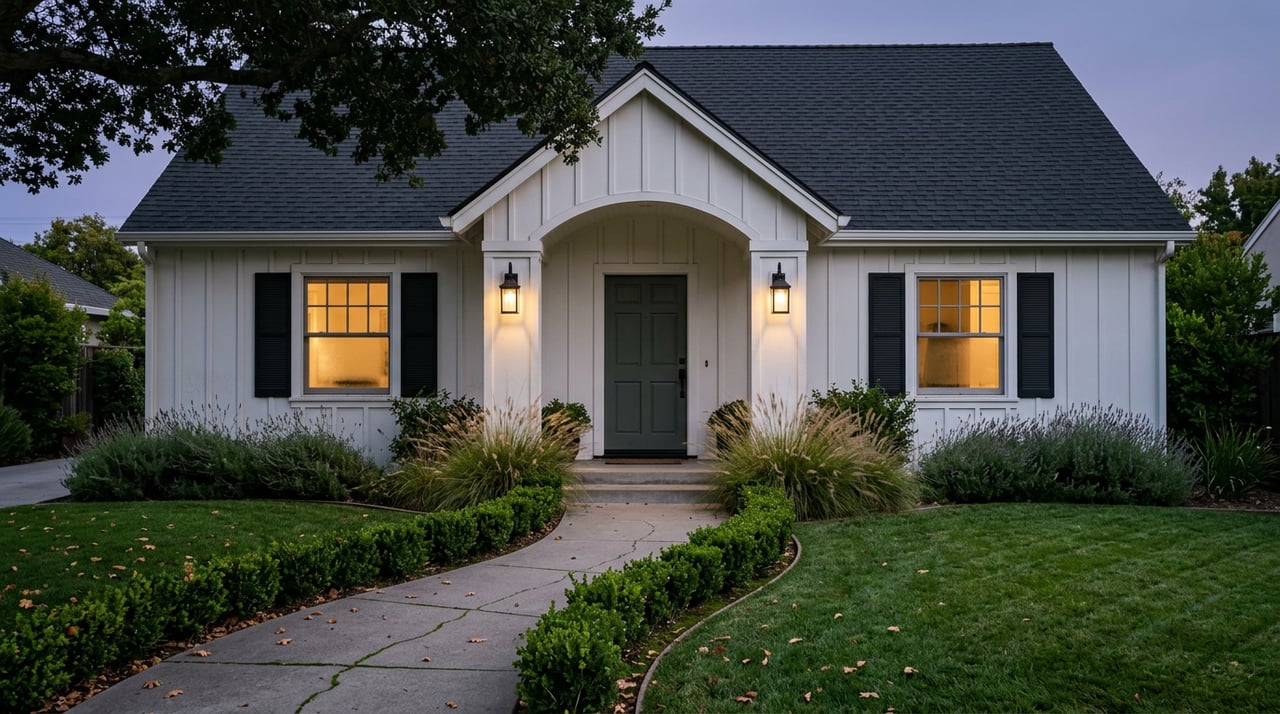
Walk from Crescent Park into parts of Barron Park and you'll notice it before you can name it. One street reads clean: no poles, no sag of cable between houses, sightlines straight down to the next cross street. A few blocks over, the wires are still up, strung house to house the way they've been since the Eisenhower administration. It isn't about money. It isn't about when the houses were built. It's about which neighborhood organized a petition in 1968 and which one didn't, and whether the city was still funding this work when yours got in line.
That accident of timing now sits inside a real transaction problem. Palo Alto's underground utility conversion program has effectively stalled, the city has no plan to finish it, and the assessment mechanism that pays for it can attach to a property as a lien. If you're selling on one of the streets that missed the window, or buying into one, that's not trivia. It's something your escrow team needs to check.
The petition wave that built the patchwork
Palo Alto's underground utility districts date back to 1965, when the city designated Oregon Avenue as its first. Foothills Park and the Alexis Drive area followed within two years, then a stretch of El Camino Real. By the end of the 1970s, the city had established twenty districts, and that decade is when some of Palo Alto's most recognizable historic neighborhoods joined in: Crescent Park, Professorville, and Evergreen Park all converted during that window. So did Green Acres, one of the earliest districts on record.
That's the part worth sitting with. The neighborhoods with buried wires today aren't necessarily newer, wealthier, or more centrally located than the ones without. They're the ones where a critical mass of homeowners organized, petitioned the city, and got their district formed while the program still had momentum and funding behind it. Miss that window, and there was no obvious second chance.
Today the city counts 45 established underground districts with eight more proposed. That sounds like steady progress until you compare it to what's left standing: Palo Alto still has roughly 116 miles of overhead line against 195 miles that are underground, much of the underground total concentrated in the Stanford Research Park area rather than spread evenly through residential neighborhoods. About 2,000 residential units are served by the underground system. Roughly 14,000 still have overhead service.
The arithmetic that made the city stop
As of 2014, the city was converting about 200 homes a year to underground service. At that pace, finishing the remaining 14,100 homes with overhead wires would take roughly 100 years and cost about $296.1 million.
That estimate came from the city's own utilities department, reported by Palo Alto Online, and it's the number that explains everything after it. A hundred-year timeline isn't a plan. It's a way of saying the plan doesn't exist. Since that 2014 pace was logged, the program has run aground: no annual conversion target, no funded pipeline for residential neighborhoods. The capital budget the city council approved in mid-2023 envisioned exactly two new overhead-to-underground conversions over the following four years, and both are on busy arteries rather than residential streets: a stretch of Embarcadero Road between Middlefield Road and Emerson Street, and a short segment of Alma Street between Addison and Melville avenues. As of that 2023 reporting, neither was expected to begin before 2026 or 2027, which means this year falls squarely inside the original window, with no public confirmation yet that either project has broken ground.
If your street already has its district, you're fine. If it doesn't, there is currently no citywide path back into the program, and the city's own reporting confirms that shift happened with very little public debate, which means many residents on overhead streets don't know the door quietly closed.
The detail that undercuts the aesthetic pitch
Here's a wrinkle that surprises people who assume underground automatically means invisible. In the newer districts, the wires go underground but the transformers and switching equipment don't. They sit in pad-mounted boxes at grade, utilitarian metal cabinets on the sidewalk strip or side yard, because burying that equipment fully is far more expensive than burying just the cable. Palo Alto Online's reporting on this describes it as complicating the very case for undergrounding: for much of the program's history, city leaders framed conversion as an aesthetic win, but a modern district still leaves visible infrastructure on the block, just a different kind than poles and cable.
If you're touring a home in a newer underground district and expecting a completely wire-free streetscape to match what you'd see in Crescent Park or Professorville, don't be surprised by the boxes. They're doing the job the poles used to do.
What's actually doing the work now
The city hasn't abandoned underground infrastructure work entirely. It's just narrower than the old citywide program ever was. The city's utilities department describes an ongoing program, running continuously since 1965, that relocates overhead electric, telephone, and cable lines to below-ground vaults or above-ground padmounts as capacity and safety projects come up, rather than as a neighborhood-by-neighborhood aesthetic campaign. Some of that current work is tied to wildfire risk reduction in the hillside areas west of Highway 280, which is a different rationale than the flatland petition drives of the 1970s.
Local civic reporting from this year shows the underlying utility conversation is still very much alive. Palo Alto adopted its fiscal 2027 budget this summer, including utility rate increases, and the city's utility advisory commission has continued pressing staff on electric reliability goals while reviewing progress on gas, fiber, and wildfire-related projects. None of that activity restarts the old residential undergrounding program. It's a parallel track, aimed at safety and capacity rather than finishing the aesthetic conversion that stalled a decade ago.
What this means if you're on the wrong side of the line
The financial mechanism behind all of this is a special assessment lien. Palo Alto's underground utility district ordinances have always worked this way: the cost of conversion is assessed against the parcels in the district, and until it's paid, that assessment constitutes a lien on the property, filed with the county and running with the land rather than the owner. That structure is written directly into the city's ordinances establishing each district.
For a seller, that means a few concrete things worth checking before you list:
- Confirm whether your parcel sits inside an existing, forming, or proposed underground district, since city engineering staff have said that if a residential neighborhood ever does form a new district, homeowners could face costs in the $6,000 to $10,000 range per household to extend service to the property, separate from whatever the city itself pays for trunk-line work.
- Ask your title company to search for any recorded assessment lien tied to a past or active underground conversion. An unresolved or partially paid assessment is exactly the kind of encumbrance that needs to be identified and addressed before close, alongside the rest of your disclosure package.
- If you're on an overhead street, don't assume a buyer will read the poles as neutral. Some buyers will ask directly whether the neighborhood has ever petitioned for a district and what killed it. Having that history ready, rather than discovering it mid-escrow, keeps the conversation factual instead of speculative.
For a buyer, the practical takeaway is simpler: don't treat "underground utilities" as a proxy for neighborhood quality or home value. It's a proxy for whether a group of neighbors organized successfully sometime between 1965 and roughly 2014, and whether the city still had funding in the pipe when they did. Some of Palo Alto's most desirable streets never got in line, and some streets you might not expect got theirs decades ago.
A short FAQ
Does having underground utilities affect a home's assessed value or property taxes directly? The undergrounding conversion cost itself can appear as a special assessment lien tied to the parcel, which is a separate line from standard property tax assessment. It doesn't change the underlying valuation methodology the county uses, but it is a recorded encumbrance that needs to be resolved or accounted for in a sale.
Can a neighborhood still petition to form a new underground district today? The ordinance framework for forming districts still exists in the municipal code, but the city's own reporting indicates there's currently no funded citywide program to support new residential conversions, and homeowners in a newly formed district would likely bear most or all of the service-extension cost themselves.
If you're weighing a purchase or a sale in Palo Alto where the utility history isn't obvious, or you want a clear-eyed read on how a specific block's infrastructure history might factor into your timeline, Suzanne O'Brien has spent two decades working these neighborhoods street by street. Request a complimentary home valuation and market consultation to talk through what your specific address is carrying, and what it isn't.