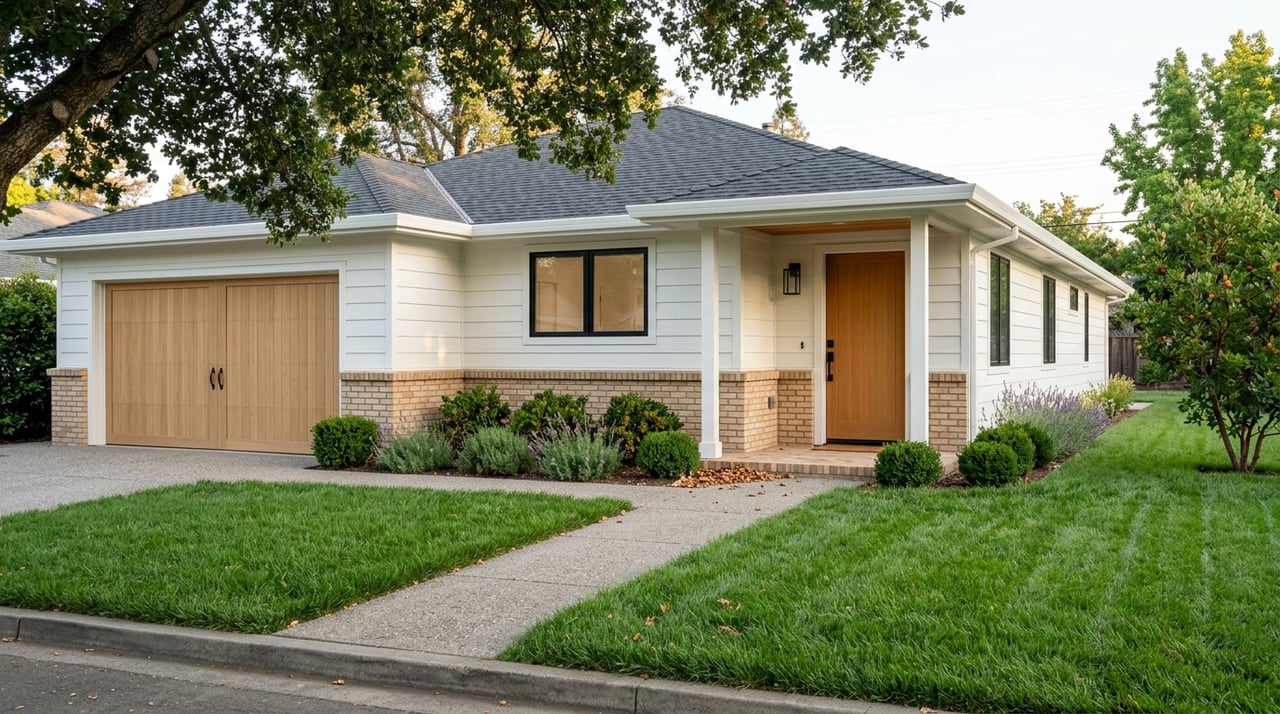
If you are choosing between new construction and a ranch home in Los Altos, you are really deciding what kind of value matters most to you. In a market where homes move quickly and median sale prices reached $5.5 million in February 2026, the right choice is not just about style. It is about timeline, maintenance, lot potential, and how you want to live now and later. This guide will help you compare both options in a practical way so you can move forward with more clarity. Let’s dive in.
Los Altos Housing Context
Los Altos remains a predominantly single-family market, with more than 85% of the housing stock made up of single-family homes, according to the city’s Housing Needs Assessment. That same report notes that 45.4% of the housing stock was built before 1960, which helps explain why ranch homes are still such a major part of the local inventory.
That older housing mix creates a clear split in today’s market. Some buyers want a finished, move-in-ready home with newer systems and fewer immediate projects. Others see value in an older single-story home on a larger lot, especially if they want flexibility to remodel, expand, or plan for future use.
What New Construction Looks Like
In Los Altos, new construction can mean very different things depending on location and property type. Current inventory includes downtown condos and townhome-style residences priced from about $1.4 million to $2.8 million, as well as detached luxury homes priced from roughly $3.8 million to $8.68 million, based on current new-construction listings.
At the higher end, homes such as 601 Joandra Ct and 944 Aura Way show what many buyers are paying for: contemporary layouts, high-end finishes, indoor-outdoor living, and in some cases detached ADUs. For buyers who want a streamlined move, that can be very appealing.
Why Buyers Choose New Construction
The biggest draw is usually predictability. A newly built home typically offers current-code systems, newer windows and insulation, and less chance of near-term repair surprises. The California Energy Commission says the 2025 Energy Code took effect January 1, 2026, and increases standards for efficiency in areas like exterior walls and windows while encouraging heat pumps.
For you, that can translate into a more turnkey ownership experience. Instead of planning around a roof, electrical update, or aging plumbing, you are often stepping into a home designed for current expectations and a shorter move-in timeline.
Tradeoffs of New Construction
The biggest tradeoff is cost. In Los Altos, the premium for a new home can be substantial, especially when the property includes luxury finishes, larger square footage, or an ADU.
There is also a planning context to keep in mind. Los Altos applies design review and zoning oversight in single-family residential areas, especially for exterior alterations, additions, and new construction. Even when you are buying a finished new home rather than building one yourself, that local review environment can shape what gets built, how long projects take, and how future changes may be handled.
What Ranch Homes Offer
Ranch homes are deeply tied to Los Altos’ housing history. Because much of the city was built out in the 1940s and 1950s, many ranch properties combine single-level living, mature landscaping, and larger lots with older layouts and systems.
That mix is exactly why ranch homes continue to attract strong interest. They often offer a different kind of value than new construction, one rooted in land, flexibility, and long-term optionality rather than immediate polish.
Why Buyers Choose Ranch Homes
For many buyers, the appeal starts with the lot. Recent sales such as 678 Benvenue Ave, 905 Spencer Way, and 1065 Ray Ave show how ranch homes are often positioned as opportunities to remodel, expand, rebuild, or explore ADU potential.
Single-level living is another major advantage. A home like 939 Carmel Ct, which sold for $5.265 million on 0.43 acres and included a guest house, shows why ranch homes can appeal to buyers who want privacy, outdoor space, and flexibility for future use.
Tradeoffs of Ranch Homes
The main tradeoff is uncertainty. Older homes can come with aging systems, deferred maintenance, and renovation needs that are not always obvious at first glance. The city’s housing report specifically notes that older housing stock tends to require more maintenance and repair.
If you are thinking about additions or major improvements, approvals matter too. Los Altos’ single-family residential rules mean that larger changes may involve design review or Zoning Administrator review, depending on the scope. SB 9 may create additional possibilities for some R1 properties, including a two-unit development or urban lot split, but those options are still subject to objective standards.
Price Differences in Los Altos
When comparing new construction and ranch homes, price is important, but it is only part of the story. In Los Altos, the market shows overlapping ranges, but each category tends to deliver a different package of value.
| Home Type | Typical Price Signals | What You May Be Paying For |
|---|---|---|
| New downtown condo or townhome | $1.4M to $2.8M | New finishes, lower-maintenance living, central location |
| Detached new construction | $3.8M to $8.68M | Turnkey condition, newer systems, contemporary design, possible ADU |
| Ranch homes | Low-to-mid $4M range and higher | Lot size, single-level living, remodel or redevelopment potential |
A ranch home may look less expensive than a custom new build at first glance, but the true comparison depends on what you plan to do next. If you expect to renovate, expand, or rebuild, your total cost may rise well beyond the purchase price. On the other hand, if the lot and layout already fit your needs, a ranch home could offer a strong long-term fit without paying the full premium for brand-new construction.
A Simple Buyer Framework
If you are weighing these two paths, it helps to break the decision into four parts. This is especially useful in Los Altos, where lot quality, finish level, and future use potential can matter as much as the age of the home.
1. Evaluate the Lot First
Start with the land, not the countertops. Ask whether the lot size, shape, privacy, and outdoor space support your goals now and later.
In Los Altos, lot value can be a major driver of price. That is one reason older ranch homes on larger parcels still attract attention even when the home itself needs work.
2. Assess Livability Today
Next, think about how the home works for your current life. A new home may offer an easier transition if you need something move-in ready right away.
A ranch home may work beautifully if you value single-story living and are comfortable making updates over time. The right answer depends on your timeline, budget, and appetite for projects.
3. Price the Future Work
If you are leaning toward a ranch home, try to separate cosmetic changes from major system or expansion work. A refresh is one thing. A larger remodel with approvals is something very different.
This is where buyers can get into trouble by underestimating total cost. The purchase price is only the starting point if your plan includes major changes.
4. Understand City Review
In Los Altos, future improvements are not just about budget. They are also about what is realistically possible under the city’s review process and objective standards.
Before you commit to a home for its future potential, it is wise to understand the local framework around single-family residential development, review, and SB 9 rules. That step can help you avoid paying for optionality that may be harder to use than expected.
Which Option Fits You Best?
New construction usually makes more sense if you want turnkey convenience, current-code energy performance, and fewer near-term projects. It can be the stronger fit when your schedule is tight and you want a cleaner path from closing to move-in.
A ranch home often makes more sense if you care most about single-level living, lot size, privacy, and the ability to add value over time. It can also be a smart choice if you are comfortable looking past dated finishes in exchange for long-term flexibility.
In Los Altos, there is no one-size-fits-all answer. The better choice is the one that fits your priorities, your timeline, and your willingness to trade certainty for future upside.
If you are comparing properties in this market, working with someone who understands the micro-differences between streets, lot profiles, and approval paths can make the decision much clearer. If you want a thoughtful, local perspective on which type of home best fits your goals, connect with Suzanne O'Brien for personalized guidance.
FAQs
What is the main difference between new construction and ranch homes in Los Altos?
- New construction usually offers turnkey condition, newer systems, and current-code efficiency, while ranch homes often offer larger lots, single-level living, and more potential for remodeling or expansion.
Are ranch homes in Los Altos usually less expensive than new construction?
- Often, yes, but not always. Detached new construction currently ranges from about $3.8 million to $8.68 million, while ranch homes can start in the low-to-mid $4 million range and go higher depending on lot size and future potential.
Why do buyers choose ranch homes in Los Altos?
- Many buyers like ranch homes for their larger lots, mature landscaping, privacy, and flexibility to remodel, expand, or explore ADU possibilities over time.
What should buyers know about remodeling a ranch home in Los Altos?
- Buyers should know that older homes may need more maintenance, and larger additions or redevelopment plans may require city review, design standards compliance, or zoning-related approvals.
Does new construction in Los Altos always mean a detached single-family home?
- No. Current new-construction inventory in Los Altos also includes condo and townhome-style options in the downtown area, with smaller floor plans and lower entry prices than detached luxury homes.
How can buyers decide between a new home and a ranch home in Los Altos?
- A helpful approach is to compare the lot, current livability, likely future improvement costs, and any city approvals that may affect your plans.