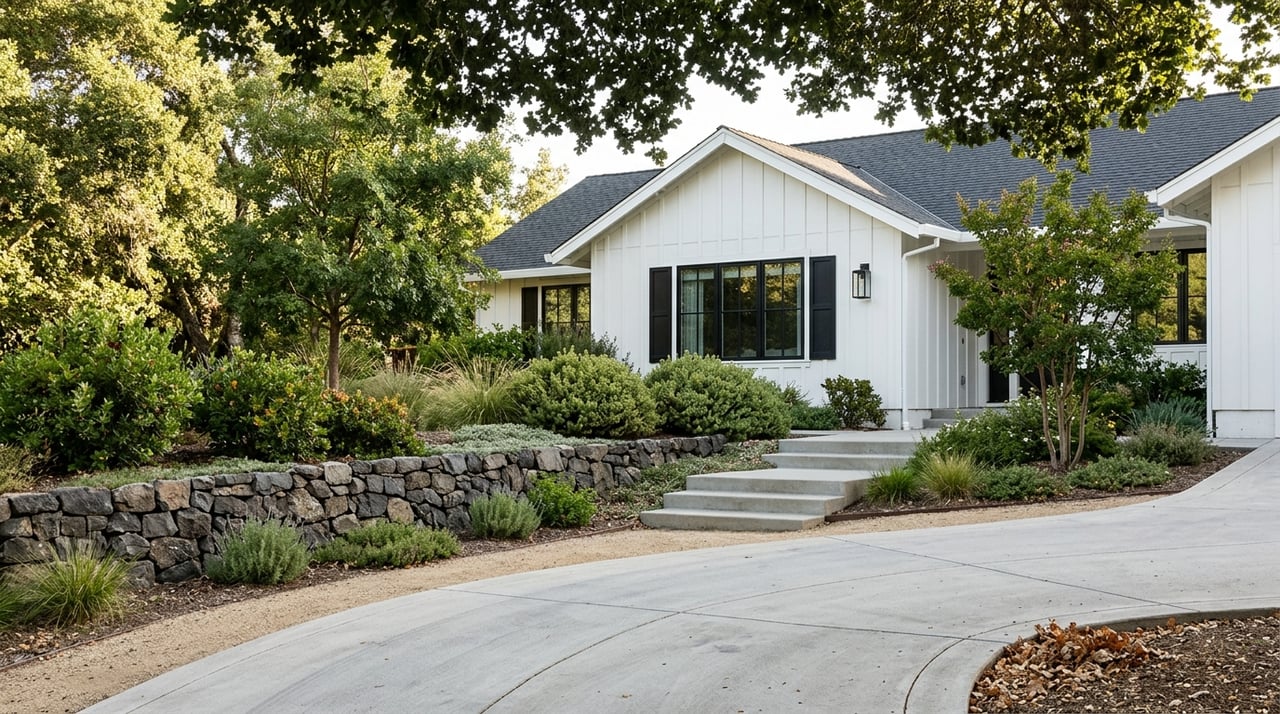
Buying in Los Altos Hills can feel very different from buying in nearby Silicon Valley communities. Here, the house matters, but the land, access, privacy, and long-term flexibility often matter just as much. If you are weighing a move to this semi-rural market, understanding those details early can help you avoid surprises and buy with more confidence. Let’s dive in.
Why Los Altos Hills Feels Different
Los Altos Hills is a small town of a little over 8,000 residents with rolling hills, broad open land, and a strong residential-agricultural identity. The town describes itself as a transition area between the urbanized mid-peninsula and the open coastal mountain range.
It is also almost fully developed, with few areas left for new homes or subdivisions. That means when you buy here, you are often evaluating not just square footage, but how a specific parcel works in real life and what it may allow in the future.
Focus on the Lot, Not Just the House
In Los Altos Hills, parcel characteristics can have a major impact on value and usability. The town uses a single residential-agricultural district with a minimum lot size of 43,560 square feet, or 1 acre, along with a 160-foot-diameter building circle.
That sounds straightforward, but site constraints can change what is actually buildable. Steep slopes over 30 percent, creek corridors, wildlife habitat, heritage oaks, and hazard areas may require a larger footprint or reduce flexibility for future improvements.
The housing stock is overwhelmingly detached single-family homes, accounting for 98.2 percent of housing in 2020. Town data also notes that the average new single-family home has been about 6,700 square feet, with some estate homes ranging from 10,000 to 25,000 square feet.
Because of that, buyers often look closely at outdoor space, privacy, guest space, ADU potential, and expansion feasibility. A beautiful home on paper may be less appealing if the lot shape, slope, or protected features limit what you can do later.
Questions to ask about lot flexibility
- What is the exact lot area?
- Does the parcel meet the town’s 1-acre minimum?
- Are additions, ADUs, garage conversions, or other improvements fully permitted?
- Are there site constraints that reduce the effective buildable area?
Topography Changes the Buying Equation
Many properties in Los Altos Hills sit on steep terrain. That affects everything from driveway design to parking, guest access, emergency access, and the cost of future work.
The town’s circulation plan notes that driveway-road intersections are more critical here than in more urban settings. New driveways generally should not exceed a 15 percent grade, and a new lot must include a buildable site within the building circle that is accessible by driveway.
For some homes, that may also mean planning around off-street parking and adequate fire-truck turnaround space. These are practical issues that can shape your day-to-day experience long after closing.
What hillside access can mean for you
A long or steep driveway may affect more than curb appeal. It can influence delivery access, ease of entry for visitors, maintenance costs, and how comfortably you use the property in all seasons.
If you are comparing multiple homes, pay attention to how each site feels from the street to the front door. Two properties with similar house size can live very differently depending on topography and access.
Understand Roads, Easements, and Shared Access
Access in Los Altos Hills is not always entirely public. The town says private roads account for about one third of its roads by length and number, and emergency roads also provide secondary access to residential areas.
That makes road type, maintenance responsibility, easements, and shared access agreements essential parts of your due diligence. These details can affect costs, privacy, and even the ease of completing future improvements.
A buyer should never treat these issues as minor paperwork. They are part of how the property functions every day.
Questions to ask about access
- Is the driveway practical for daily use as well as emergency vehicles?
- Who maintains the road or shared access lane?
- Are there recorded easements, encroachments, or shared-driveway agreements?
- Has a civil engineer or licensed land surveyor certified the site’s height and location for prior work?
Open Space and Trails Shape Daily Life
One of Los Altos Hills’ defining features is its connection to open space. Much of that open space is privately owned and maintained, and many town paths provide access to adjacent regional open-space lands.
The pathway system is a major part of the town’s character. Los Altos Hills says it has more than 86 miles of pathways designed for safe, convenient non-vehicular travel, recreation, and emergency alternatives.
For many buyers, that is a big draw. A property near open space or a trail connection may offer a more secluded feel and easier access to outdoor recreation.
At the same time, some off-road paths use public easements on private property. That can affect privacy, fencing, landscaping, and maintenance, so it is worth understanding exactly how a path interacts with the lot.
Privacy can vary from parcel to parcel
In Los Altos Hills, privacy is often created by land, trees, elevation, and distance between homes. It is not always about walls or built screening.
That means one property may feel tucked away because of natural topography, while another may feel more open despite having a large lot. Buyers should look carefully at whether privacy comes from natural screening, structures, or simply the way the parcel sits on the land.
Questions to ask about open space and privacy
- Does the parcel border open space or a trail connection?
- Does a pathway easement cross the property?
- How much privacy comes from natural screening versus structures?
- Are protected trees or view-sensitive features likely to affect future changes?
Protected Trees and Site Review Matter
Heritage oaks are protected in Los Altos Hills, and that can affect future plans for additions, grading, landscaping, or site changes. If there is disagreement about a tree’s condition, the applicant may need to obtain an arborist’s opinion at their expense.
This is one more reason to think beyond the house itself. Mature trees can add beauty and screening, but they can also shape where and how future improvements may happen.
If you hope to renovate, expand, or rework outdoor areas over time, tree protection and other site review standards should be part of your early evaluation.
Safety and Preparedness Should Be Part of Due Diligence
Wildfire is one of the town’s primary threats. The town notes that most roads are narrow and that residents may need to evacuate quickly, while hazard severity mapping takes into account vegetation, slope, fire weather, dead-end roads, cul-de-sacs, and limited egress.
Fire protection is provided through the Los Altos Hills County Fire District and the Santa Clara County Fire Department. The district also offers brush chipping, yard-waste drop-off, and property fuel-evaluation visits.
For buyers, wildfire awareness is not just an insurance issue. It also affects how you think about access, vegetation, maintenance, and long-term preparedness.
Landslide awareness also matters. Town emergency-preparedness materials note that areas prone to landslide hazards include old landslides and the bases of steep slopes.
Utilities, Improvements, and Hidden Project Costs
Town review standards for new residences and major additions can include a wide range of conditions. Depending on the parcel, these may include pathway fees or easements, fire sprinklers or a hydrant, grading and erosion-control plans, underground utilities, sewer connection if the parcel is within 200 feet of a sewer line, and certification of height and location by a civil engineer or licensed land surveyor.
For buyers, this means future project costs can be much different from what you might expect in a flatter, more urban neighborhood. Even a simple remodel or site update may involve more consultants, more planning, and more review.
If you are buying with renovation in mind, it is smart to evaluate feasibility early rather than assume you can make changes later without added complexity.
Verify School Assignment by Address
If schools are part of your home search, verify assignment by exact property address before closing. Santa Clara County Office of Education district materials show that Los Altos School District serves most of Los Altos, part of Los Altos Hills, part of Mountain View, and part of Palo Alto.
Palo Alto Unified School District also notes a joint arrangement with Los Altos School District that allows some Los Altos Hills families to request transfers to Gardner Bullis Elementary. Because boundaries and assignment details can vary, address-level confirmation is important.
Build the Right Local Team
Los Altos Hills purchases often benefit from a broader group of professionals than a typical suburban transaction. When a property includes slope, access, tree, or easement considerations, the right experts can help you understand both current conditions and future options.
A strong local team may include:
- A local buyer’s agent familiar with hillside inventory and access issues
- A civil engineer or licensed land surveyor for slope, setbacks, and site layout
- A geotechnical engineer for steep lots or landslide concerns
- An arborist for protected trees and screening trees
- An insurance broker familiar with wildfire exposure
- A title and escrow team to review easements and recorded restrictions
- A contractor or builder for driveway, grading, and remodel feasibility
A Smarter Way to Compare Homes Here
When you buy in Los Altos Hills, it helps to compare homes through a wider lens. Price per square foot is only part of the story.
A better comparison often includes:
- Buildable area and site constraints
- Driveway grade and ease of access
- Private road or shared-access responsibilities
- Trail easements and privacy considerations
- Protected trees and review limitations
- Wildfire and slope-related preparedness
- Future renovation or expansion feasibility
That kind of analysis can save you time, reduce risk, and help you choose a property that truly fits your lifestyle and goals.
If you want guidance that goes beyond the listing details, Suzanne O'Brien offers thoughtful, hands-on advice for buyers navigating Los Altos Hills with clarity and confidence.
FAQs
What makes buying in Los Altos Hills different from buying in Los Altos or Palo Alto?
- In Los Altos Hills, lot size, slope, access, privacy, easements, and site constraints often matter as much as the house itself.
What is the minimum lot size for homes in Los Altos Hills?
- The town uses a single residential-agricultural district with a minimum lot size of 43,560 square feet, or 1 acre, along with a 160-foot-diameter building circle.
Why does driveway access matter when buying a Los Altos Hills home?
- Many properties sit on steep terrain, and driveway grade, road access, parking, and emergency vehicle access can affect daily use, safety, and future project costs.
Are private roads common in Los Altos Hills?
- Yes. The town says private roads make up about one third of its roads by length and number, so maintenance responsibility and access agreements should be reviewed carefully.
How do trails and pathway easements affect Los Altos Hills properties?
- Los Altos Hills has more than 86 miles of pathways, and some off-road paths use public easements on private property, which may affect privacy, fencing, landscaping, and maintenance.
Should buyers in Los Altos Hills be concerned about wildfire and landslide risk?
- Yes. The town identifies wildfire as a primary threat, and emergency-preparedness materials also note that old landslides and the bases of steep slopes can be prone to landslide hazards.
How should school assignment be verified for a Los Altos Hills home?
- School assignment should be confirmed by exact property address before closing because service areas and transfer arrangements can vary within Los Altos Hills.