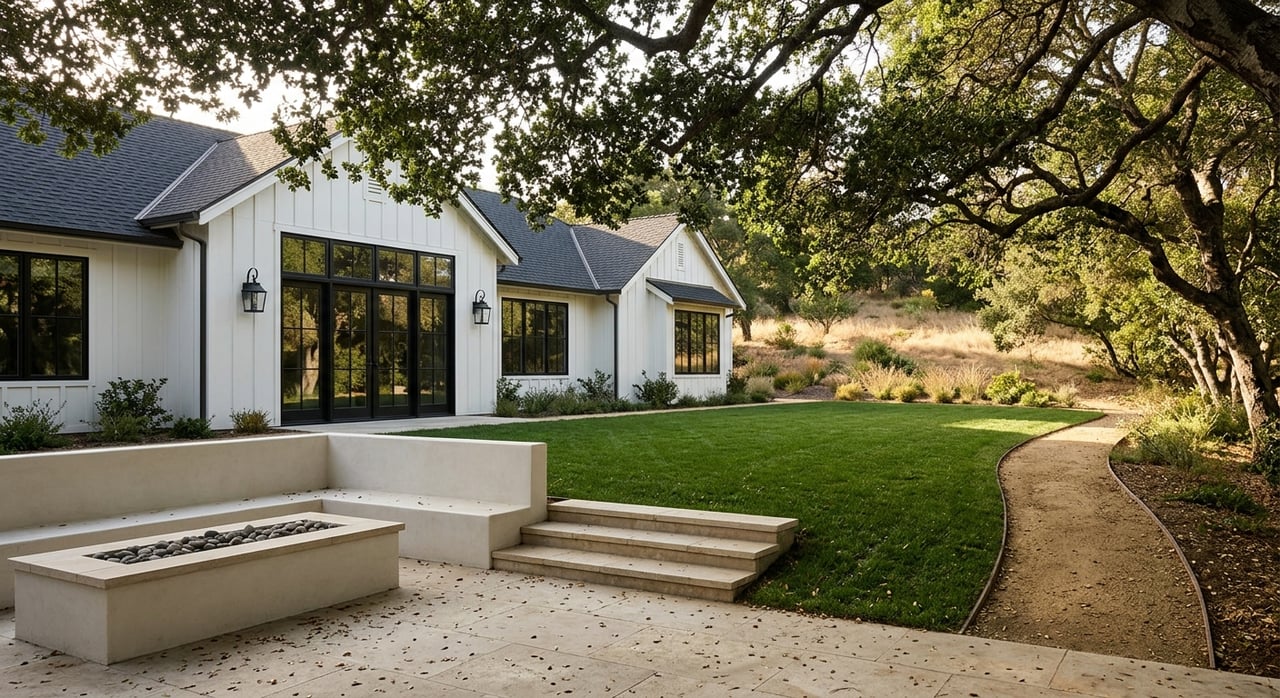
Looking for space, privacy, and a quieter pace without leaving Silicon Valley behind? Estate living in Los Altos Hills offers exactly that, but it comes with a lifestyle that feels different from a typical suburban neighborhood. If you are considering a move here, it helps to understand not just the homes, but also how daily life actually works. Let’s dive in.
What estate living means here
Los Altos Hills is a 9-square-mile town incorporated in 1956 and officially described as a residential-agricultural community with gracious homes, open land, rolling hills, and a uniquely rural atmosphere. The Town’s planning framework is designed to preserve a semi-rural character with single-family residences, small-scale agriculture, recreation, and open space.
That shapes your experience in a very practical way. You are not moving into a town built around shops, dense housing, or a busy commercial core. Instead, you are choosing a home base that prioritizes land, quiet, and separation between properties.
Why homes feel so private
One of the clearest differences in Los Altos Hills is lot size. The Town’s housing policies state that the minimum lot size is one acre, and density generally decreases as slopes become steeper. This is a big reason the community feels open and spacious.
On a relatively flat one-acre lot, the Town says maximum development area is typically 15,000 square feet, with maximum floor area typically 6,000 square feet. Structures also generally must sit 40 feet back from the street and 30 feet from side and rear property lines. In daily life, that often means more visual breathing room, more distance from neighbors, and more land to care for.
Flexible living on larger parcels
Large parcels can also support flexible household needs. The Town allows one ADU and or one JADU on qualifying residential-agricultural properties with an existing single-family home. That can be useful if you want space for guests, multigenerational living, or a more separate home office setup.
This matters because estate living is not only about square footage. It is also about how your property can adapt to your routines over time while still fitting within the town’s low-density setting.
Daily life is centered outdoors
In Los Altos Hills, outdoor movement is part of the rhythm of everyday life. The Town says its pathway system exceeds 86 miles and connects neighborhoods to surrounding open space. These paths are used by walkers, runners, bicyclists, horseback riders, and school children.
That network helps define the feel of the town. Rather than relying only on sidewalks along busy streets, many pathways are set away from roadways and designed to offer a more scenic, rural experience. If you value morning walks, trail access, or room to move outdoors, this is one of the area’s strongest lifestyle features.
Open space is part public, part private
A common first impression in Los Altos Hills is that there is open land everywhere. That impression is real, but it is important to understand that much of the open-space feel comes from a mix of public and private land. The Town notes that much of what people think of as open space is privately owned and maintained.
Town-owned and community recreation assets include Byrne Preserve, Juan Prado Mesa Preserve, and Westwind Community Barn. There is also access to nearby regional open-space lands through town pathways. For residents, this creates a strong connection to nature, but it also comes with shared responsibility.
Property stewardship is part of the lifestyle
In many neighborhoods, maintenance is mostly about your home and yard. In Los Altos Hills, stewardship often extends further. The Town says residents are responsible for keeping pathways on their property clear of brush, debris, and overhanging branches, and drainage must be managed to help reduce erosion.
That gives the town much of its attractive, cared-for character. It also means owning here usually requires more hands-on attention, whether you manage that work yourself or coordinate professionals to handle it.
Expect to drive for many daily needs
The biggest tradeoff in Los Altos Hills is convenience versus space. The Town’s general plan states that the community is intended to rely on more urbanized areas for employment, goods, and most services. Commercial activity is not generally proposed within town limits, except for commercial stables.
For you, that means errands are usually part of a driving routine. Grocery runs, dining, shopping, and many everyday services are typically accessed in nearby communities rather than inside town.
Roads shape the day-to-day rhythm
Primary movement through Los Altos Hills runs along roads such as Page Mill Road, Arastradero Road, El Monte-Moody Road, and Magdalena Avenue. These connect residents to I-280, Foothill Expressway, and Highway 101. At the same time, the Town describes the circulation system as narrow and circuitous, which helps discourage through-traffic.
In practice, this supports a quieter residential feel. It also means getting around can feel less direct than in a more grid-based suburb. If you live here, route planning becomes part of your routine, especially during school drop-offs, commute windows, or appointments off the hill.
Schools and services still support daily life
Even with its rural feel, Los Altos Hills functions well as a residential base because key services are nearby or accessible through surrounding communities. The Town’s community-services information notes that residents are served by multiple school districts, that Gardner Bullis Elementary is available to all residents, that Foothill College is in town, and that El Camino Hospital is nearby in Mountain View.
Residents also have access to the county library system and VTA’s 511 traffic-information service as part of the broader support network. So while the town itself is not service-heavy, it is closely tied to regional infrastructure that supports everyday life.
School districts are address-dependent
If schools are part of your home search, location within Los Altos Hills matters. According to the Town, the southern part of town is in the Los Altos School District and Mountain View-Los Altos Union High School District. The northern section is in Palo Alto Unified School District.
Because assignment depends on property location, this is one of the details you will want to confirm early when comparing homes. In a market where buyers often weigh both lifestyle and logistics, this can be an important part of narrowing your search.
Utilities and infrastructure need attention
Estate living often means more independence, and that extends to property systems. The Town’s sanitary sewer information states that property owners are responsible for maintenance, repair, and replacement of the sewer lateral from the building to the main connection. Town engineering documents also include septic-system requirements and onsite wastewater guidance.
Water use is another practical consideration. The Town directs residents to drought resources such as free home water audits, lawn-replacement information, graywater guides, and local water-district resources. In short, ownership here often involves paying closer attention to infrastructure than you might in a more conventional suburban setting.
Wildfire readiness is part of daily planning
Wildfire preparedness is an important part of living in Los Altos Hills. The Town says wildfire is one of the primary threats facing the community, and residents are encouraged to register for AlertSCC and Nixle. Because many roads are two lanes and not very wide, evacuation planning is especially important.
This is not just seasonal advice. It can influence how you think about landscaping, brush management, emergency supplies, and planning for pets, livestock, or anyone with access needs.
Local fire prevention supports residents
Public safety in Los Altos Hills is provided through the Santa Clara County Sheriff’s Department and the Los Altos Hills County Fire District. The Town notes that fire-prevention support includes free brush chipping, yard-waste drop-off days, and property fuel evaluations.
These resources help residents stay proactive. They also reflect an important reality of estate living here: preserving the beauty of the landscape goes hand in hand with reducing risk and maintaining readiness.
Who tends to love living here
Los Altos Hills often appeals to buyers who want a calm, private setting with room to spread out while staying connected to Silicon Valley. The combination of large lots, scenic pathways, and a quieter road network can be especially attractive if you value outdoor space, separation, and a more retreat-like home environment.
At the same time, it is best suited to people who are comfortable with the tradeoffs. You are choosing more land, more stewardship, and more driving in exchange for privacy, views, and a distinctly semi-rural setting.
The bottom line on daily life
Daily life in Los Altos Hills is shaped by intentional planning. The town preserves space, limits density, and maintains a rural character that feels increasingly rare in Silicon Valley. That is a major part of its appeal.
If you are considering estate living here, the right question is not just whether you love the homes. It is whether you will enjoy the full rhythm of the town, including outdoor access, driving patterns, property upkeep, and emergency readiness. For the right buyer, that balance can feel exceptionally rewarding.
If you are exploring Los Altos Hills or preparing to sell an estate property here, Suzanne O'brien offers thoughtful, high-touch guidance rooted in local experience, personalized service, and a clear understanding of how buyers evaluate this unique market.
FAQs
What is daily life like in Los Altos Hills?
- Daily life in Los Altos Hills is generally quiet, spacious, and outdoors-oriented, with large residential parcels, extensive pathways, and a semi-rural setting that relies on nearby communities for many goods and services.
How large are lots in Los Altos Hills?
- The Town states that the minimum lot size is one acre, with lower density on steeper slopes, which helps create the area’s open and private feel.
Are there walking and riding paths in Los Altos Hills?
- Yes. The Town says Los Altos Hills has more than 86 miles of pathways used by walkers, runners, bicyclists, horseback riders, and school children.
Are school districts the same throughout Los Altos Hills?
- No. The Town says school assignment is address-dependent, with the southern part of town in Los Altos School District and Mountain View-Los Altos Union High School District, and the northern section in Palo Alto Unified School District.
What are the tradeoffs of living in Los Altos Hills?
- The main tradeoffs are greater dependence on driving, more property maintenance and infrastructure oversight, and a stronger focus on wildfire preparedness in exchange for space, privacy, and a scenic rural atmosphere.
Does Los Altos Hills allow ADUs?
- Yes. The Town allows one ADU and or one JADU on qualifying residential-agricultural properties with an existing single-family home.